
A well-maintained acrylic sports court provides high performance and precision, delivers more than just a flat playing surface, and reflects true professionalism. Be it a tennis court, a pickleball court or a multi-use area, every game requires a surface that gives players traction, comfort and bounce. The action of the sun, rain, or persistent foot traffic will cause deterioration of the coating, fading of colors, and loss of grip over time. These are the indicators for professional upkeep and resurfacing.
Why Professional Maintenance Matters?
At SLT Sports, we design, build and maintain high performance courts across India. From tennis court construction to synthetic acrylic flooring solutions, our mission is simple – to extend the life of your court and keep it looking brand new season after season. Professional care ensures:
Uniform responsiveness and safety for players: A properly maintained acrylic court ensures uniform ball response so you can play accurately and confidently. Resurfacing also helps maintain maximum traction and cushioning so you stay injury-free in high intensity play.
Durability of surface texture and colour: High quality acrylic coatings protect the court from all exposure to UV and weathering which as a result prolongs the surface smoothness and color for years. This ensures the court looks professional and plays consistently well.
Moisture and surface cracking: A sealed acrylic court prevents water from getting into the base so there’s no swelling or damage. Proper resurfacing and coating layers creates a flexible barrier that resists cracks and extends the life of the court.
Lower long-term maintenance costs: Lower long-term maintenance costs are a big plus of investing in quality and durable assets from the start. This upfront spend often means fewer repairs, less frequent replacements and less downtime over the life of the item or system.
SLT Sports uses advanced tools, eco-friendly cleaners and premium grade acrylic materials that protect the surface from early wear and extend its life by several years.
Understanding Your Acrylic Sports Court
Familiarity with your acrylic sports court’s construction – from sub-base to top acrylic coating – is essential in selecting the best and most economical maintenance or resurfacement option.
Sub-Base: this important base construction is asphalt or concrete constructed with proper slope and drainage which provides the structure and stability of the court and the run-off water away from the court surface for safe play.
Acrylic Primer: promotes adhesion between the coating and the base. This important preparation coat serves to seal the porous base and to bond the layers of acrylic coating on top. Proper adhesion between layers will reduce the potential of flaking and/or delamination of the coating layers.
Resurfacer Layer: smooths imperfections and provides durability. This multi-purpose acrylic base coat consists of silica sand that fills in small cracks and smooths out texture inconsistencies in the base layer. A smooth base layer is necessary to obtain the optimal feel and performance of the subsequent color coats.
Cushion Layer: absorbs shock for player comfort. This layer uses rubber granules with a minimum thickness of 3/8”, reduces stress on players’ joints and legs, and provides fatigue relief and greater comfort during long play sessions.
Color Coating: beautification and slip resistance. This final performance layer which incorporates fine sand into the top, is where the aesthetics of the court originate, and where the texture of the grip provides for safety.
Signs Your Court Needs Resurfacing
No matter how strong your surface is, it will show signs of wear. Here’s how to know when your court needs professional attention:
Faded Colors: The surface looks chalky and dull due to UV exposure. This visual degradation not only looks bad but is also an early sign that the protective properties of the color coat is diminishing.
Cracks or Peeling: Common after several monsoon or dry seasons. These structural failures need to be addressed before resurfacing as they can indicate base layer issues or poor adhesion from the original installation.
Puddles or Poor Drainage: Indicate uneven leveling or water blockage. Such areas of water standing can soften the acrylic coating, accelerate wear and create slippery and unsafe playing conditions especially after rain.
Reduced Grip: Makes play unsafe and inconsistent.This condition means the fine sand texture in the color coat is worn out and the surface is slippery and compromises player safety and ball court interaction.
Worn Out Line Markings: Affects gameplay and visual appeal.If the markings become too faint or indistinct they can seriously compromise competitive play and need to be re-striped for clarity.
SLT Sports, India’s no.1 tennis court construction and maintenance company, our experts will assess the damage, plan the resurfacing process and get your court looking and playing like a tournament court.
The Process Of Resurfacing By SLT Sports
Resurfacing is a science and an art. SLT Sports’ process is articulated for durability and precision.
Step 1: Clean the surface
Cleaning of an existing court removes dirt, moss and loose coating. Any surface cracks are filled with an acrylic patching compound that is compatible with the existing system. The preparation of the surface is critical any contaminants or loose material, will prevent new layers from properly adhering to the new surface. Flexible acrylic based crack repair products will provide a repair that will expand and contract with the court base.
Step 2: Repair the Base
If the base is damaged or does not drain well, a minor leveling is done prior to applying new coats. Proper base preparation is key to performance we mentioned above the base is the most important part of every good acrylic sports court. Neglecting the base will yield premature failure of the new surface, cracks, puddles and wasted resurfacing dollars. To achieve the necessary slope and evenness we use magic self leveling compounds or localized repair materials while target for proper water runoff and a long life of the court surface.
Step 3: Applying the Acrylic Resurfacer
A resurfacer is installed to smooth the slopes of the court and develop a good bond for the next coating. The resurfacer fills small voids and smooths the surface for the next coating level. This step is an important part of the restoration to revive the texture lost over years and to create a monolithic surface to receive high performance color and cushion coating levels. The resurfacer contains fine aggregate (sand) that significantly improves the mechanical bond between the old and new acrylic coats and makes the resurfacer impervious to peeling.
Step 4: Cushion or Color Coating
Depending on the project we may apply multiple coats of synthetic acrylic flooring – standard and cushioned. The color coats look great and also provide just the right amount of traction and comfort. For high-performance courts, installers layer the cushion coats to maximize shock absorption and minimize player fatigue without reducing ball-bounce accuracy. They apply each color coat with millimetre-level precision to create a consistent, vibrant finish and mix in the correct amount of silica sand for maximum non-slip grip.
Step 5: Line Marking and Finishing
The last step sport line markings are applied with premium grade acrylic paint. Each line marking is measured to official dimensions for tennis, pickleball, or multi-sport configuration. Precision is important all lines are taped and fully measure to the millimetre to conform to international and national federation specifications. This last layer of premium contrast paint in durable and completes the court for competing while looking stunning.
In the end you have a seamless, durable, and tournament ready surface that looks brand new.
Why Select Acrylic Instead of the Others?
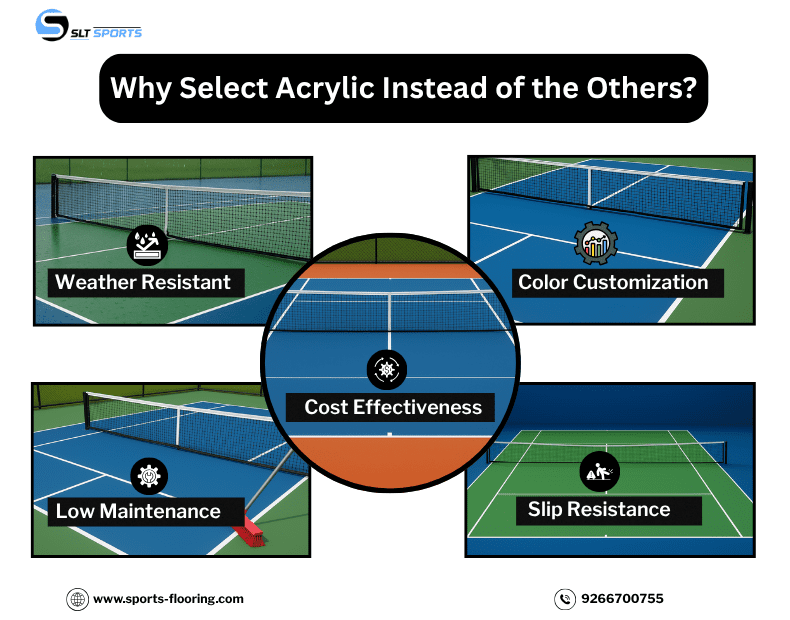
When it comes to playing surfaces for sports, you’ll have alternatives including Polyurethane (PU), PVC or synthetic turf. However, there are distinct advantages of acrylic sports courts due to the following:
Weather Resistant: This helps ensure the court stays playable and structurally sound in all climates and all seasons, and doesn’t crack or deteriorate too quickly. A quality acrylic surface won’t become brittle in intense heat, and will not mildew, or suffer water damage in high humidity and heavy rains.
Low Maintenance: Its sealed and non-porous acrylic surfaces are mildew, staining and dirt build-up resistant, so it’s a simple hose or sweeping away from being clean. This makes this flooring economical, especially for facility managers.
Slip Resistance: This texture is imperative for players to make quick movements, stops and pivots without slipping/falling. The controlled inclusion of silica sand in the final coats of acrylics, provides a consistency in the coefficient of friction, while maintaining a careful balance of grip vs foot movement.
Color Customization: This will allow a court owner to co-ordinate the surface to its branding, school or personal preference making the court much more inviting. The color options are endless to create a truly unique and appealing court.
Cost Effectiveness: Long lifespan and reduced long-term maintenance costs. The initial price may be greater than some other surfaces, but the cost savings over the life of the surface in repairs and maintenance allows you to consider the synthetic acrylic a better overall investment. Far longer lifespan and minimal repairs leads to a lower initial total cost of ownership than other flooring options.
This is primary reason most tennis court builders and sports facility designers choose to use synthetic acrylic flooring for long term projects.
Custom Solutions for Every Sport
Every sport has its own performance requirements – and SLT Sports knows that.
Tennis Courts
Our tennis court construction and resurfacing services focus on achieving the perfect ball bounce, grip and cushioning. For schools, clubs or private villas, we build surfaces that meet ITF standards. This coating process eliminates dead spots and ensures uniform ball response across the whole court, essential for professional training and tournaments. We are ITF certified not just in quality but in the exact speed classification you require.
Pickleball Courts
As demand rises for the construction of pickleball courts, a meticulous approach to the surface texture and markings of pickleball courts is critical. We ensure every bounce is consistent and every serve is secure. We pay special attention to the fine grit in the acrylic coat so players have grip for fast lateral movement and the lightweight plastic ball bounces true. Our final line marking is to USAPA specifications, clearly defining the non volley zone and boundaries for tournament play.
Multi-Sport Courts
For complexes or schools, we offer multi-purpose acrylic sports courts with customizable colors and markings for basketball, volleyball and futsal. These surfaces are durable and versatile and can withstand heavy and varied traffic of multiple sports, a cost effective solution for maximising the use of a single court. The acrylic system is shock absorbing making it a safer high performance base for many athletic activities.
Our team will tailor each project to your space, budget and game requirements.
Maintenance Advice
Regular maintenance, after resealing your pickleball court, will ensure a long life and retention of color.
Basic Maintenance Routine: Regular sweeping, cleaning, and removal of debris is a key factor to maintaining the condition of the court and extending the life of the acrylic surface.
Sweep weekly: Keep a soft broom or blower handy to remove leaves and dirt. Ensuring that organic matter does not build up is extremely important! Trapped debris can feed mildew and degrade the surface.
Wash monthly: Clean court with babe detergent and water. Use a soft cloth or pressure washer (set to a fanned out low setting) to elevate dirt without damaging the acrylic layers.
Don’t let water pool: If your court will pool water after the rain, be sure to promptly remove it to prevent staining. It is important to push water off the court as soon as possible with a squeegee or mop. After water has pooled on the court for an extended period of time, the water can corner the surface and lead to premature failure.
No vehicles or sharp objects: Heavy, pointed or metal objects will scar the acrylic permanently and ruin the smoothness of the court and its performance.
Inspect annually: Schedule an annual inspection with SLT Sports to note wear early. Early detection or repairs can be easily fixed or addressed before requiring resurfacing.
Common Mistakes To Avoid
Even good maintenance can go wrong if the wrong materials or methods are used. Avoid:
Using harsh chemicals: These will break down the acrylic material, lose its color and compromise its structure. They will also reduce the slip resistance, making the surface very slippery.
Pressure Washing at High Pressure: High-pressure washing will do some serious damage to your court. It can literally etch the surface, taking away the fine texture that gives the thing some bite. And, of course, stripping away the sand that helps the ball bounce consistently too. To make matters worse it’ll force water into cracks & failing patches, making any damage down the line a whole lot worse.
Crack Repairs with Cement or Epoxy: Don’t even think about using standard cement or non-acrylic epoxy to fix cracks. It won’t stick to the flexible surface, so it’ll just crack & fall apart in no time. And when it does, you can bet you’ll be dealing with a lot more costly fixes down the line. On top of that, it’ll be hard to play on the court with rigid patches poking out everywhere.
Dirt Build Up in Shaded Areas: Leaving dirt in the shaded areas to build up is just a recipe for disaster. These damp spots become havens for mould and mildew, which is not just a problem to deal with – it’s going to leave nasty stains all over your court. And don’t think about trying to scrub it off either, these patches can be super slippery, hard to remove and green in color.
The Smart Way to Maintain Your Court: Last but not least, remember to go with a pro when it comes to building or resurfacing your court. Hire an expert to use materials fully compatible with the acrylic surface.
Client Success – The Real Story
From schools and sports academies to private villas and community complexes, our courts are the top pick for people who actually know what they’re talking about when it comes to playing the game.
Tennis Academies: We build ITF-certified tennis courts that can take a beating – with surfaces that are as tough as they are consistent. We’re talking about high-performance surfaces that meet all the official standards for speed, spin and bounce so your athletes can train like pros.
Recreation Centers: We’ve designed pickleball courts that really can handle the heavy use and crazy weather that’s part and parcel of life in public facilities. Our surface solutions are the key to keeping your courts up and running, with minimal fuss and bother.
School Playgrounds: If you need a multi-sport surface that’s safe, affordable and will still be holding up in 10 years time, you need to check out our acrylic systems. The non-slip, cushioned design will help prevent injuries and is a great all-rounder for all sorts of sports programs.
Every project we take on is a reflection of our passion for getting things right and our commitment to doing things the right way – that’s just the SLT Sports way.
Get The Most Out Of Your Investment
Resurfacing is about keeping your sports court in top shape, not just looking good but actually protecting the investment you’ve made. A well-maintained acrylic sports court can provide years of smooth, safe play – all 10 years plus of it – if you take care of it right.
The good news is that with some TLC and the right materials, you can:
Avoid costly repairs by fixing the little things like cracks and drainage issues while they’re still minor, before they become super expensive structural problems down the line. Think of regular maintenance as a safety net – it extends the life of the court by years, saving you from having to resurface it all over again.
But that’s not all: you can also keep play speed and grip just where they should be – consistently good. Good grip is key to player safety – it lets you know exactly where you stand so you don’t risk a nasty slip and fall. A well looked after surface also means the play is fair and fun for everyone – it gives you that ball-surface interaction just right.
And of course there’s the colour and surface quality too – just because you’ve got a top-class colour coat doesn’t mean you can just leave it. Regular cleaning and a bit of protection from the sun will keep your court looking as good as new and it’ll be a pro-looking finish.
Lastly, you can also boost the value of your property or facility – a sports court that’s in top nick is a major selling point for a property or something that gets a lot of use. It shows people that the place is run by a pro, with high standards.
Choose synthetic acrylic flooring from SLT Sports and every layer of your court is built to perform and built to last.
Conclusion
Your sports court is kind of a second skin for the athletes who play on it – after all, the first serve is just as important as the last point. Every moment counts, and the surface quality is what makes all the difference. At SLT Sports, we’ve been building tennis courts & flooring solutions for years – we’re one of India’s top tennis court builders and flooring specialists, offering high-end tennis & pickleball court construction and synthetic acrylic flooring systems that last. Whether you need a resurface, some repairs or a fresh new court built to the highest international standards – we’re here to lend a hand. Give your acrylic sports court the TLC it needs – let SLT Sports bring performance and perfection together for you – starting today.
Frequently Asked Questions
What is the difference between acrylic and synthetic tennis courts?
An acrylic tennis court is made of acrylic coatings on a hard base, while a synthetic tennis court can include materials like PU, PVC, or turf. Acrylic offers better grip, UV resistance, and durability than other synthetic types.
Which type of tennis court is best?
The best type of tennis court depends on location and usage, but acrylic hard courts are considered the best overall. They offer consistent bounce, all-weather durability, easy maintenance, and professional-grade performance suitable for all levels of play.
What is a synthetic hard court?
A synthetic hard court is an acrylic-coated surface over concrete or asphalt, offering consistent bounce and weather-resistant performance. It offers a consistent bounce, strong grip, and all-weather resistance, making it ideal for professional tennis and multi-sport play.
Which tennis court is the hardest to play on?
Grass courts are hardest due to fast, low bounce and slippery footing, demanding sharp reflexes, perfect timing, and strong footwork. Its slippery surface and uneven bounce make rallies shorter and control more challenging.
What is the cost of synthetic tennis courts in India?
Synthetic tennis court cost in India varies by base, coating system, and features. Basic courts cost less, while multi-layer acrylic courts require higher investment.