
Owners take a long hard look at the pros and cons of an indoor vs outdoor volleyball court before even thinking about spending a single rupee on infrastructure, budgeting and picking out the right materials for the job. When people start looking at building a volleyball court, they end up comparing all sorts of different systems and installation methods, and trying to figure out the real difference between how they’ll hold up indoors vs outdoors. The lads on the construction team weigh up the climate, how the base is prepared and how much use it’s going to get before deciding on the right volleyball court flooring that will stand the test of time. Lots of academies go for outdoor volleyball court flooring, because the synthetic surfaces can handle the sun, rain and temperature changes with no problem. Others just prefer the controlled environment of an indoor court where the flooring is specifically designed to give you a good grip, be comfy and end up with a consistent game.
Places that want to get a new synthetic volleyball court built are always asking for the lowdown on what the differences are between acrylic surfaces and other options for flooring material. The pros will usually recommend synthetic because it means less upkeep over the years, you get better shock absorption, and it gets installed fast. When it comes to the volleyball court construction, the builders have to stick to a set of strict rules that include getting the base slope just right, making sure the drainage is sorted, applying the right thickness of coating and putting down the official markings on the court. And all this helps to make sure the court is the right size so you can get a proper game of volleyball going on in India.
Understanding Indoor vs Outdoor Volleyball Court Requirements
Understanding Indoor vs Outdoor Volleyball Courts – it’s all about the conditions they’re built in. When building a court, it makes a huge difference if it’s going to be indoors or out – not just how it looks, but also how long it’ll last. As the project gets more serious, builders and people in charge will start comparing different ways of putting it together, whether that’s with the floor or the base, and how durable it’s going to be. But before they can even think about that, they need to consider things like what the weather is going to be like where the court is being built, whether water’s going to drain properly, how solid the base is going to be, and how many players are going to be using it. Loads of sports academies choose to build their volleyball courts outdoors because synthetic acrylic surfaces are pretty much immune to the elements – sun, rain or heat, they can handle it all with ease. On the other hand, there are plenty who go for indoor courts because the flooring is specifically designed to give that perfect combination of grip, comfort and fair play.
Cost Structure of Indoor vs Outdoor Volleyball Court
- Indoor courts cost more due to roofing and ventilation: Indoor volleyball courts come with a hefty price tag – fancy roofs, fancy ventilation and fancy structural work which pushes construction budgets up sky high compared to your standard outdoor volleyball courts. These fancy requirements call for some serious financial planning ahead of time to make sure you don’t get hit with any nasty surprises in the middle of building your court.
- Indoor courts need protection from moisture and dust: IIndoor volleyball courts need a super controlled environment – we’re talking moisture free and dust free conditions to keep the flooring good as new and performing consistently, not to mention safely. These safeguards mean athletes can enjoy a consistent level of traction, less fatigue, and a much longer lifespan on the floor when they’re playing volleyball.
- Outdoor courts face harsh weather and UV exposure: Outdoor volleyball courts are at the mercy of the elements – rain, heat, wind and UV radiation hammering away at them, which is why you need flooring materials that can take a punch and keep on going. These conditions aren’t for the faint of heart, so you need to pick a material that can withstand them all and keep on performing when you’re out there playing volleyball.
- Acrylic systems suit both indoor and outdoor courts: Acrylic flooring systems are a go-to for indoor and outdoor volleyball courts because they offer a winning combination of durability, traction and value across the board. Installers love acrylic systems because they provide a consistent playing surface that can take a beating from the weather and still stays looking good after years of use.
When it’s time to select a volleyball court manufacturer you want to go with the brands that are well recognized for being the best in the business.
Performance Differences Between Indoor and Outdoor Courts
Indoor and outdoor Volleyball Court Flooring behaves differently based on the condition of the Synthetic Flooring. Players get more consistency on an Indoor Volleyball Court, while outdoor volleyball court flooring relies on tough, weather-proof Synthetic Acrylic Materials to stay durable.
- Indoor vs outdoor performance differences: When it comes to volleyball courts, the difference between indoor and outdoor courts is a big deal because of how the flooring conditions change everything. It’s not just a case of indoor courts being different from outdoor courts, but how those flooring conditions affect the way players move around, and ultimately the whole vibe of the game.
- Flooring quality impacts gameplay consistency: A really top-notch volleyball court construction with good flooring will keep the bounce nice and consistent, provide plenty of grip and movement in any direction. This all adds up to a really stable game that feels pretty smooth, especially when you’re playing on high-quality synthetic flooring, acrylic systems or other durable materials – it’s like having a reliable sidekick for your training sessions.
- Engineers ensure safe court construction: Designing courts safely, so that everyone who plays on them doesn’t get hurt, is a big part of what engineers do when they build volleyball courts. They’ve got to get the slope just right, make sure it’s got good drainage and a solid base to start with, and then pick flooring materials that can withstand all the different things that can happen indoors and outdoors.
- Experts deliver standard-compliant courts: When it comes to delivering courts that meet the required standards, certified installers are the people who’ve got to make sure that all the very technical bits and bobs are up to scratch – that means accurate bounce, the right level of traction and proper alignment.
Climate Influence on Volleyball Court Selection
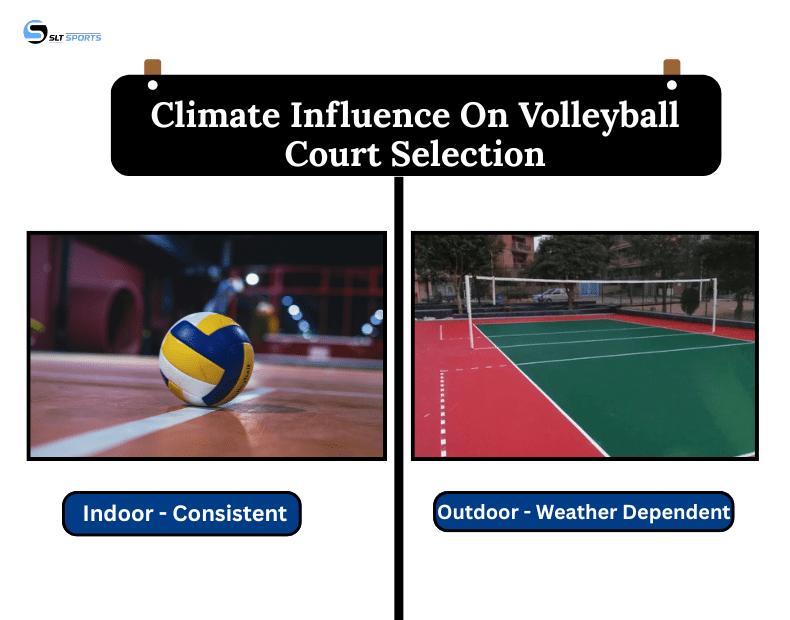
Climate has a massive impact on whether owners opt for an indoor or outdoor volleyball court, and for good reason. Indoor courts mean no worrying about bad weather ruining the game and a consistently good surface all year round. Outdoor courts, on the other hand, have to withstand the elements – rain, heat, and humidity – which means they need to have some serious, durable flooring.
The installation teams will tweak the flooring material depending on what the region needs. In tropical areas, facilities are more likely to go for materials that hold up to the weather and can keep their grip.
Before starting any construction on the volleyball court, developers take a close look at the soil to make sure they get the base structure just right. The teams laying down the foundation set up a multi-layer acrylic system supported by a solid base. And synthetic surfaces allow players to train in all sorts of conditions because they stay stable no matter how hot or cold it gets.
When clubs are looking for the perfect volleyball court construction, they pretty much want to know the costs, timelines, curing times and the like, and many of them are opting for synthetic because it’s a little gentler on the environment and maintains a consistent surface. And the players trust synthetic systems because they get a reliable game every time across the seasons.
Volleyball court manufacturers create smart flooring solutions that perform well in all sorts of climates. Contractors do their best to make sure outdoor courts have got that durable coating that stops the surface from deteriorating under the heat even when the sun’s beating down. And indoor courts mean players will always get a good grip no matter what.
Indoor vs Outdoor Volleyball Court Pros & Cons
Lots of families opt for an outdoor synthetic acrylic court because it’s a bit more affordable and easier to install, but if you’re serious about getting a top-notch court, you should get the materials from a reputable manufacturer who knows their stuff when it comes to withstanding the elements. Reputable builders create a well-structured timeline and apply their skills to complete the job safely. And schools tend to go for experienced contractors who can keep the project on track and get everything done efficiently. Finally when it’s all done the installers will put the finishing touches on and make sure that court can withstand every test and condition that the players are going to put it through.
Pros & Cons
Pros of Indoor Volleyball Courts
- Indoor flooring delivers consistent results because controlled environments protect the volleyball surface from rain, sunlight, dust, and sudden temperature swings.
- Indoor courts make for better training because you know you’re getting a consistent grip and bounce every time out. This means your athletes feel more confident and less worried about taking unnecessary risks in a high-pressure tournament situation.
- Indoor lighting really does make a huge difference in the game because the extra visibility gives athletes a clear advantage in terms of speed of reaction, accuracy, and just overall performance when it counts.
Cons of Indoor Volleyball Courts
- Building an indoor court tends to be a more expensive affair because you’re talking about roofing, ventilation, insulation, and electrical work – all of which add up pretty quickly and turn the whole project into a bigger, more complicated beast.
- Building an indoor facility is a big project, because you need to get all the structural approvals out of the way, figure out what materials to use, get the drawings right and then sort out all the services – which basically just adds more time to the whole thing.
Pros of Outdoor Volleyball Courts
- Outdoor courts are a more budget-friendly option because they don’t have that expensive roof to worry about and use a durable surface that can hold up to whatever you throw at it whether that’s high level competition or just casual play.
- The natural lighting on an outdoor court is a game-changer because it really brings out the colors of the court and just makes the whole place feel more alive and inviting for anyone using it.
Cons of Outdoor Volleyball Courts
- One downside of outdoor courts is that they do require some maintenance because the weather can take its toll on the surface – you’ve got the sun, the rain, dust, and all the rest – so you’ll need to give it a good clean and maybe even do some minor repairs every now and then to keep it in top shape.
- Outdoor construction always depends on weather because rain causes delays, extends curing times, and makes the job harder for installers and contractors.
Choosing the Best Flooring for Indoor vs Outdoor Volleyball Courts
When you select a volleyball court for a home gym or outdoor space, you’re not just ticking boxes – you’re weighing up all the practicalities: durability, how well it’ll perform, how much effort it’ll need to keep it in tip top shape, and what it’ll ultimately set you back in the long run. Developers come up with all sorts of options for volleyball court flooring but synthetic acrylic is generally the one that delivers the goods – whether you’re a high-flyer or just out for a bit of fun. It’s got a multi-layer coating that does a top job of keeping the ball in play and the ball bouncing as it should, which always gives you an edge.
Outdoor courts need flooring that can put up with the sun beating down on them 24/7, so manufacturers have had to get creative with special formulas to stop the color fading and keep the surface grippy all year round. On the other hand, indoor courts demand something that stays consistent even when the temperature is flipping all over the place, so contractors get really nitpicky about the surface thickness, how elastic it is, and the smoothness of the finish before they recommend a system.
When you’re building a court, you slap on multiple coating layers starting with a primer and finishing with the final splash of color – it’s a pretty precise process if you want to get that perfect bounce. Loads of training facilities swear by synthetic courts because they cut down on injuries and overall improve the gameplay. When it comes to building tournament-ready facilities in India, the pros make sure the court is exactly the right size so it can handle the crowds and foot traffic without any issues.
Final Comparison
A pretty full-blown comparison of an indoor and outdoor volleyball court is what a lot of owners are trying to wrap their heads around when deciding which option to go with, in order to determine value for money and, in the long run, get the most bang for their buck. Indoor courts give you super control over play, a consistent performance every time, and a year-round option for training, making them ideal for high-intensity sessions. On the other hand, outdoor courts offer great affordability, accessibility, and a real visual treat when built with high-quality materials. Once you decide on an outdoor court, you start looking at the pros and cons as regards cost, and that means balancing out infrastructure costs, the materials required, and how long the court will last. Comparing the cost of building an indoor versus an outdoor court is all about weighing how much you’re willing to spend versus what you get for your investment.
. Loads of volleyball clubs and academies now opt for synthetic acrylic flooring solutions as they provide great support for long-term training and excellent grip underfoot. When you start building your volleyball court, you design the drainage system, prepare the sub-base, apply coating layers, and complete the final finishing tasks. That’s the nitty-gritty of volleyball court construction—getting something consistent, safe, and professional. If you’re an owner planning your own court, you balance budget, local conditions, and available space. Owners wanting a smooth process often prefer a reliable contractor who handles the entire installation and uses the machinery needed to get the flooring right.
Conclusion
When it comes to doing an outdoor build you’re going to need strong outdoor flooring that won’t give way under the elements. Conversely indoor courts require all to be spot on in terms of surface alignment – and then you’ve got to get the coatings just right. Some facilities even personalize the court by adding the owners colors to give it a bit of extra zing. Outdoor projects being what they are need high-grade flooring that will last out. And for those looking to build an indoor court, all being well, it’s about getting the surface spot on and getting the final coatings just right. And as an added touch some teams even go for a bit of customization, like adding their branding in the form of custom volleyball court colors. In short, an indoor court is where you want to be if your goal is professional-grade training in a controlled environment – whereas an outdoor court can be a nice way to get some cost-effective training and flexibility on tap.
Frequently Asked Questions:
Indoor courts are the pricier option because all the extras like roofing, air conditioning, proper lighting and the structural work to hold it all up really drive up the overall cost of the build.
Indoor volleyball courts are the way to go if you need consistent bounce, grip and movement on the court. Outdoor courts become unpredictable because weather and temperature swings affect them, while indoor courts stay consistent due to full protection.
Well, they offer the most affordable option, install way easier, and stay pretty darn durable as long as builders use good-quality materials.
The weather wrecks outdoor courts, the sun pounds them constantly, and they need a lot of TLC to keep the surface safe.
Synthetic acrylic flooring is the winner here – it gives you a super strong grip, is really durable and pretty much performs best in all sorts of environments.