
Climate Really Does Matter – and It’s Affecting Your Outdoor Basketball Court flooring Performance Because the weather out there is having a direct impact on how long your outdoor court lasts – and how safe it is to play on – a lot of owners actually spend a lot of time researching weather patterns before they dive into making a flooring purchase – because you want to make sure you’re making the right decision when it comes to protecting your investment. We’ve seen firsthand how climate affects outdoor basketball court flooring materials and that’s why we take the time to support all the diverse regions. In this blog, we’re going to break down why material selection is such a big deal and just how much climate can affect the lifespan of your basketball court.
Most outdoor courts have to deal with the daily grind of sunlight, rain, humidity and wild temperature swings – which all put a lot of stress on the surface. But here’s the thing – different materials react in different ways to that stress. And if you don’t understand those differences – well, climate is going to have a pretty big impact on your basketball court’s performance. We see it all the time – when buyers end up with a court that’s just not up to the task – it’s because they didn’t take the time to choose a durable option that can withstand the local conditions. At SLTSports, we’re here to help you make a smart choice, because when you’ve got a reliable system – you can guarantee consistent play.
Why Choosing the Right Basketball Court Material Matters?
Importance of Material Selection for Performance and Longevity
The right outdoor basketball court material is crucial because it has to withstand all that the elements and constant use can throw at it . A little thought about which material to choose goes a long way in terms of safety, durability, how much maintenance you’ll need to do and how comfortable the court feels to play on. And let’s not forget how the climate is going to affect the flooring – the way it reacts to temperature and moisture can completely change the experience of playing on it.
Meeting the Demands of High-Usage Outdoor Basketball Courts
For owners who are choosing to go with an outdoor court, they usually want a surface that can really take a pounding and still keep on going for years to come – especially for something like a community court or academy. Choosing the right material will not only get you a better grip and better performance, but it will also help your court withstand the weather better.
Safety, Grip, and Player Confidence on Outdoor Courts
Choosing the right basketball court flooring material is also a safety issue – you want to make sure you’ve got stable traction so players aren’t slipping and sliding all over the place during those quick changes of direction. And high-quality coatings can really help reduce the heat impact – that means they can take the sun’s UV rays without breaking down. The quality of the surface is going to affect how much confidence the players have – and that can make all the difference in the game. So we aim to help people make responsible choices with their material selection, because doing it right means you’ll be replacing your court a lot less often in the long run. But choose the wrong material and you’ll be dealing with degradation and installation flaws before you know it.
Durability Against Seasonal Weather and Climate Stress
Now when it comes to durability, the right materials can really handle the temperature swings that come with the seasons. Moisture-resistant systems will keep the structure of the court safe, and those layers that are resistant to UV rays will keep the color looking bright for years to come. You’ll also find that you’re doing a lot less maintenance work because the surfaces are stable and less prone to repairs. At SLTSports we always recommend choosing a material that can handle the local climate.
Material Selection Based on Usage Frequency and Footfall
Because how often you use the court really matters too. In high traffic areas you’ll need materials that will really hold up to the wear and tear, schools want durable options because their kids are using it every day, and community courts need something that can take the stresses of year-round use. The right outdoor basketball court flooring will last if you choose a material that is up to the challenge of the climate.
How Climate Influences Outdoor Basketball Courts?
Outdoor courts are at the mercy of the weather. Heat makes materials expand – it’s a bit like when you leave your car in the sun and the tires get all soft and squishy – and it really doesn’t help when all those fancy coatings start to lose their grip. And then there’s the humidity – which makes it slippery as heck – especially when you add moisture to the mix.
Rain is also a major player here – it gets into the tiny little gaps in the structure of the court and affects how well the surface can bond – which if you’re playing on a court that won’t give you a good bounce or grip, it’s not much fun at all. And let’s not forget about the climate. What works fine in the summer months might turn the court into a muddy mess in winter. Which is why you’ve got to know what the weather is doing where you live – and plan accordingly.
Keypoints: Climate Impact Summary
- Humidity makes the surface feel all slippery and even encourages algae to grow: When the air is full of moisture it settles on the basketball court surface and makes it feel all dodgy to play on. And if you don’t clean it regularly then all sorts of microbe-type things start to grow which can make the surface pretty gross, and not just that they can also make it unsafe.
- Rain water gets into all the nooks and crannies and starts to break down the coatings over time: When water starts pooling on the basketball court surface or doesn’t drain properly, you get all sorts of issues like soft patches and a really uneven texture – which is not much fun for players. It also makes it really hard to get a good game of basketball going, because the surface is all over the place.
- The temperature swings which can cause all sorts of problems with the court: When it’s hot and then gets cold, the flooring expands and contracts and that can cause little cracks to form – which in due course can turn into bigger problems and weaken the whole surface. Which isn’t great if you want a long lasting court that gives you a good game.
- How much maintenance a court needs over the years: In places where the weather is pretty harsh, you’ve got to be on top of it all the time – inspecting, cleaning and recoating as needed to keep the court safe to play on. And it’s not just the weather itself that’s the problem – it’s the fact that different conditions really do take their toll on the surface, which means that you need to be on top of things to keep it all running smoothly.
Heat and Sunlight Effects on Basketball Court Flooring
Strong sunlight makes playing on a basketball court a real challenge for players – especially when the surface feels blisteringly hot. And you really do need to take heat tolerance into account because the climate has a huge impact on how long your basketball court is going to last.
- Heat long-term durability: High temperatures take a toll on the surface of the basketball court – especially in regions where the sun’s rays are at their strongest during the summer. It’s no surprise that the climate really has an impact on how well a basketball court performs when it’s under the spotlight.
- Fades coating pigments and weakens surface strength: When strong sunlight hits the surface of a basketball court, it’s not a pretty sight. The UV rays break down the color pigments in the coating, weakening its protective strength. The result is that the surface of your court looks worse for wear – and needs a lot more maintenance than it should.
- Surface cracking on low-quality materials: Weaker materials for your basketball court are prone to expanding under the heat of the sun, but then contract rapidly when the temperature drops. All this expansion and contraction causes cracks to appear – and that’s another way the climate affects the surface of your court.
Humidity and Moisture Effects on Outdoor Courts
How Humidity Impacts Grip and Player Safety
Humidity makes a huge difference on outdoor courts because moisture really wreaks havoc on grip, texture and the long term durability of the flooring. When the air is humid, it makes the floor slippery because moisture settles on the surface making it tough to get any kind of decent traction – especially for fast moving players. This makes them feel like they’re struggling to stay upright and the changes in direction are really hard to control. Not to mention that all the trapped water inside the coating can cause algae to grow there and decrease safety because you’re left with slippery areas on the court that increase the risk of injury. You find places like coastal regions tend to be pretty humid most of the year because it’s just so damp.
Effect of Humidity on Coating Bonding and Surface Stability
Humidity also plays a big role in weakening the bonding between the different layers because water just seeps right through and affects the quality of the adhesion. And when cheap materials are being used they fail fast because the moisture is just eating away at the weak chemical bonds. You start to see things like peeling bubbling and soft spots appearing all over the surface – it’s not a pretty sight. Luckily though, by using SLTSports engineered coatings you can do yourself a world of good because the moisture has less of an impact on them and they stay more stable. Additionally, humidity also plays a role in how the ball bounces because the softer layers on the court make it less consistent across different regions. Players end up feeling like they can never quite get a read on the surface.
Increased Maintenance Requirements in Humid Conditions
Humidity also increases maintenance needs as it promotes all sorts of algae growth and surface contamination. Court owners are basically forced to clean the surface a lot because the dirt and algae tend to accumulate a lot faster when the weather is humid. On top of that, moisture also starts to affect the structural layers because it slowly works its way deeper through the surface gaps. A waterproofing solution will really go a long way in reducing these issues because strong coatings block the moisture from getting in.
Why Moisture-Resistant Materials Matter in Humid Regions
You need to take humidity very seriously because it can really affect how comfortable and safe your basketball court is all year round. If you ignore the risks then you’re just going to end up with higher repair costs because the damaged layers will need to be restored often. On the other hand moisture resistant materials tend to hold up a lot better in humid conditions and won’t need any major changes in performance. That’s why it’s so important to choose quality systems as they will give you consistent play because they can handle the moisture without having any problems.
Rainfall and Water Impact on Basketball Court Materials
Rain has a huge impact on the durability of outdoor basketball courts, affecting both the top layer and the base structure. Heavy downpours can create big problems because drainage systems sometimes can’t keep up. This leaves standing water on the surface which then seeps into the deeper layers, weakening the whole thing. In areas where it rains a lot it’s essential that the court is built with water-resistant materials that can withstand frequent storms – or the surface just won’t be stable.
When the court is wet, it changes how the ball bounces, because the surface isn’t as firm as it is when it’s dry. This is especially true in the places where the rain just keeps coming, month after month. We always recommend getting a good waterproof system – the right coatings make a huge difference to how resilient the whole surface is. To get things right you need to think about how the rain is going to behave in your area – because that really does affect how stable the court is all year round.
Keypoints: Water-Related Challenges
- Standing water harms long-term structural integrity: When water hangs around on the court, over time it seeps into the surface layers and starts to rot the base underneath. This is the beginning of the end for the court – long term it means you’ve got more chance of getting cracks, soft spots and uneven bits.
- Poor drainage increases coating damage risk: If the slope of the court isn’t right, or if the outlets get blocked, then water can’t get out quickly enough and the whole thing becomes a mess. Trapped moisture starts to break down the coating, and before you know it you’re dealing with peeling paint, bubbling and all sorts of other premature failures.
- Rain increases maintenance frequency: Rain brings in all sorts of dirt, debris and moisture that can be a real pain to keep on top of. In fact courts in areas that get a lot of rain need a lot more looking after to stop people slipping and to keep the surface in good nick.
- Moisture reduces bounce consistency: When the court is wet it gets all soft and soggy under the ball, which makes the game feel all wrong. And if the moisture isn’t evenly distributed across the surface then you can get all sorts of weird bounce zones popping up – which is bad for play quality and safety.
- Waterproof layers improve overall lifespan: Good waterproof coatings can stop water getting in and weakening the whole surface – and that means a lot more durability and a lot more consistent play all round.
Temperature Swings and Seasonal Stress on Basketball Courts
Temperature swings put a lot of stress on outside basketball courts – the kinda stress that comes from materials trying to keep up with the temperature changes day in and day out . As the sun beats down on a court in the afternoon, the top layer of the surface gets all soft and squishy which makes it lose its firmness and flexibility. Then when the sun goes down and the temperature drops, that top layer starts to get all hard & stiff again, but the problem is the constant back-and-forth of expanding & contracting causes tiny cracks to show up in the surface. These tiny cracks get worse over time and eventually start to deepen, weakening the whole court.
Temperature fluctuations also take a toll on court materials by messing with the internal structure of the flooring system. If you’re a basketball court owner you need to factor this in because the climate can really affect how the court stands up to the seasons. The right choice of materials is a must – it helps keep athletes safe by giving them a stable, playable court even when the weather is going heavier. And let’s not forget about the color & finish – good quality coatings are a must to keep the court looking its best. Too much UV and temperature stress and even the best finishes can start to break down. Proper basketball court installation is key to getting the most out of your court because if its not done right the whole thing can start to fall apart under the constant stress of seasonal changes.
Common Mistakes Buyers Make When Choosing Outdoor Basketball Court Materials
Lots of people buy flooring without a clue how it will hold up with the weather. And that lack of understanding ends up coming back to haunt them in the long run because whatever cheap material they went with really isn’t so tough after all.
Keypoints: Buyer Mistakes
- Ignoring UV resistance requirements: Flooring that can’t handle UV coatings fades in no time and becomes all worn out from the direct sunlight. And when it’s exposed to it all day every day, the colors start to break down, the material gets weakened, and overall the whole thing starts to fall apart pretty fast.
- Selecting coatings without moisture protection: You can also run into problems with flooring that’s sensitive to moisture if it gets rained on or even just humid in the air. This sort of flooring tends to just soak up water like a sponge and once that happens you can kiss goodbye to your slippery surface.
- Choosing materials unsuited for heavy rainfall: Places where it rains a lot need flooring that can dry out quickly and has some sort of water protection going on. Cheap materials that can’t handle excess water will just basically turn to mush and leave you with a surface that’s all lopsided and falling to pieces.
- Overlooking surface flexibility under temperature shifts: When it gets hot and then turns cold again, the floor starts to warp and contract like crazy and if the material itself isn’t flexible, watch out – it’s gonna start cracking left and right and that means higher repair bills.
- Selecting inexperienced installers for outdoor projects: And to top it all off, a lot of people who put flooring in don’t even know what they’re doing – they skip over the important steps like setting the right slope and making sure all the layers are properly lined up. And you guessed it – bad installation equals bad flooring lifespan.
SLTSports helps customers make informed decisions – saving you from throwing money at a problem that could have been avoided if you knew what you’re getting into.
Best Materials for Different Climate Conditions
When it comes to your basketball court flooring, it’s all about knowing how well it’ll hold up in your local climate. The truth is, what works in one place might not work in another – so you need to pick the right type of flooring for the kind of weather you get. We reckon engineered acrylic systems are a good choice – they’re balanced and can handle the ups and downs of pretty much any climate.
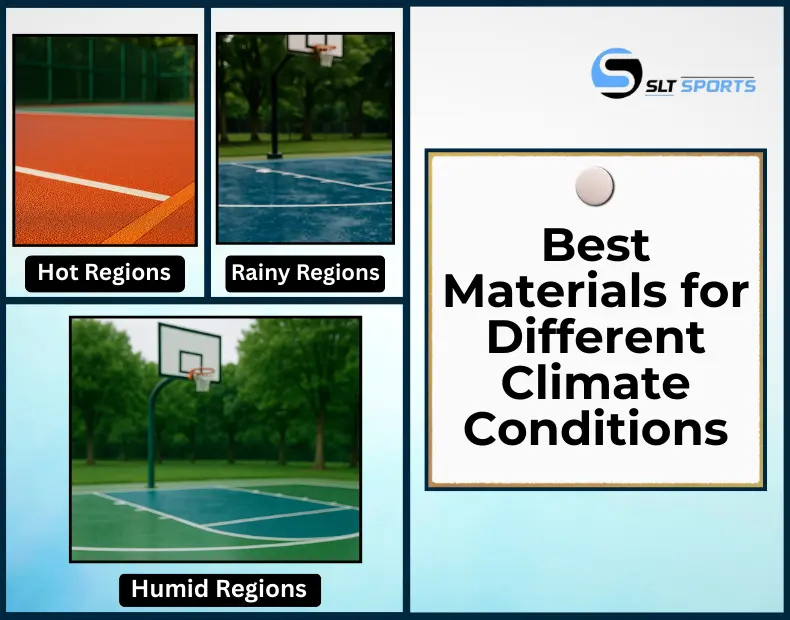
For Hot Regions
When picking a new flooring, don’t forget to go with UV-resistant materials – sunlight can really make its mark on colors. We also reckon flexible coatings are a good idea – that way your structural layers get some extra protection from heat expansion which, let’s be honest, can weaken weaker surfaces. And lastly, go for heat-stable systems – high temps can cause surface fatigue if you don’t get it right.
For Humid Regions
And before we forget – moisture-resistance is important too! Damp conditions can really weaken the adhesion between different layers, which is a total pain. So – look for breathable coatings that allow for a bit of ventilation. And, no surprise here, anti-fungal formulations are also a must – humidity is just asking for trouble with those kinds of things.
For Rainy Regions
Waterproof coatings, of course, are also a must – water can creep into surface pores and cause all sorts of problems. And, consider using quick-drying systems because who hasn’t had to deal with a sudden downpour ruining a game or practice. Proper drainage design is also super important – because standing water is basically a recipe for long-term trouble.
Making the right choice really does pay off in the long run – because the climate where you play is going to affect the lifespan of your basketball court, no matter where you are.
Outdoor Basketball Court Installation Insights
Installation quality has a huge impact on the lifespan of the material. A lousy installation job basically sets the stage for a coating failure down the line because weather has a nasty habit of finding its way onto weak surfaces. As a result, skilled teams know that getting the base just right is essential – strong foundations are what give a job its durability.
SLTSports takes the time to train its installers because at the end of the day it all comes down to delivering consistent quality every time. In fact, contractors should really be inspecting the slope design to make sure there’s proper drainage going on – anything less and water will just be piling up. You see, builders need to apply that coating evenly, too, because the surface texture can make all the difference when it comes to grip. And let’s not forget that installers need to take climate exposure into account – how the material behaves in different weather conditions can be the difference between a job that lasts and one that doesn’t.
At the end of the day, homeowners want reliable backyard basketball court installation that’s going to last a long time and perform well – safely. Experienced installers know that’s why following the correct curing times is crucial – premature use of that flooring can have some pretty nasty consequences for the unfinished layers. And professional teams know that it all comes down to choosing the right methods for the job – what works in one climate won’t cut it in another, so they pick techniques that are tailored to the local temperature and humidity levels.
Cost Factors Influenced by Climate Conditions
Climate directly impacts your flooring choices, which is why UV-resistant or moisture-proof materials become pretty much essential in harsh areas. Temperature swings, humidity and – if you’re in a really rainy spot – the amount it’s going down with the rain all kinda make a big difference to how much preparation, coating and long term maintenance is needed.
- Hot climates need UV-resistant materials, raising overall cost: Higher end UV-stable coatings cost a bit more just because they use better quality pigments and additives to ensure they last really well. You’re basically paying a bit extra upfront because you need floors that can take the heat and not just literally but also won’t fade or suffer from thermal stress.
- Humid regions require moisture-resistant systems, increasing material expense: Moisture-protective layers include anti-fungal and adhesion-boosting compounds that bump the manufacturing cost up a bit. These coatings keep algae from growing and prevent the surface from weakening over time – which also means less repair jobs in the long run.
- Rainy climates need waterproof layers and strong drainage, raising construction cost: Builders end up having to design super precise slopes and drainage channels because a well-functioning court needs to be able to handle a lot of rain without issues. Waterproof coatings cost a bit more because they stop water from getting in through the surface pores and repeatedly damaging them.
- Seasonal temperature shifts require flexible materials, increasing installation budgets: Temperature fluctuations mean the coating needs to be elastic – i.e. it’s able to stretch and contract without cracking. Flooring that’s properly suited for the local climate is gonna need a lot less repair work in the long run because it can resist the structural stress of all the different seasons.
Top Outdoor Basketball Court Surfaces for Long-Term Performance
When it comes to finding the best outdoor basketball court surfaces, you’re looking for a combination of UV stability, grip and weather resistance that can really hold up over time. The best surfaces deliver consistent grip, absorb player impact, manage water efficiently, and resist UV damage, ensuring long-lasting playability with minimal maintenance.
- Acrylic Sports Flooring Delivers Grip and Playability: What really sets the best acrylic systems apart is how they consistently deliver on the court, day in & day out. That’s because the engineered coatings they use are designed to put up with the heat, humidity and constant pounding they get from players without showing any significant wear and tear.
- Cushion Acrylic Systems Improve Long-Term Player Comfort: And let’s not forget about the cushioning. Acrylic surfaces have it covered because their rubberized components are designed to soak up the impact of repeated foot pressure. Players can go for longer without getting worn out – and they’ll still be able to enjoy the game, thanks to the surface that continues to perform smoothly throughout the year.
- Outdoor Coatings Enhance Water Management and Weather Resistance: Now, a lot of the top outdoor basketball court surfaces are also permeable, which means they let water drain away quickly, thanks to micro textures that guide it off the surface. This prevents puddles from forming and stops moisture from seeping into the surface and causing damage during rainy seasons.
- UV-Resistant Preserves Color and Surface Strength Longer: One more thing about the best surfaces out there – UV-stable materials used on them can really stand up to the sun. They won’t start to fade or weaken under the intense sunlight like inferior coatings might. As a result, they’ll continue to look great and stay durable no matter what Mother Nature throws at them.
Conclusion
Weather is a major player when it comes to the performance of outdoor basketball courts – it affects everything from the surface texture to the bounce of the ball. And, of course, climate plays a big role here too. Heat, humidity and rain can all have a major impact on the durability and overall performance of a surface. Selecting the right materials upfront is the key to getting value for your money and avoiding costly repairs down the road. So, when looking to upgrade your outdoor basketball court, consider seeking out the expertise of a reputable supplier like SLTSports: they can help you choose the right flooring to deliver consistent results and make sure players can enjoy the game all season long. The bottom line – investing in quality flooring is key to consistent, enjoyable play.
Frequently Asked Questions:
It really puts flooring material to the test – the heat, the moisture, the rain – and its durability and performance on the surface take a hit as a result.
You see, UV-resistant materials save the coating from the sun’s damage – no fading, no surface breakdown.
Rain lets water seep into those surface pores, which just weakens the material layers and screws up the bounce and safety.
Unfortunately it does – harsh climates just make materials wear out faster and deal with more stress from the weather.
Engineered synthetic acrylic flooring material is the winner here – that stuff is tough as nails to heat, humidity, rain and all other temperature fluctuations.