
Pickleball courts that perform well are never accidental. They are the result of correct planning, strong base construction, proper drainage, and a surface system designed for real play conditions. This detailed guide explains how to make a pickleball court from scratch, covering every stage in depth so that the final court feels safe, consistent, and long-lasting.
For the average homeowner, club or sports facility owner, understanding this process is key to avoiding the most common construction pitfalls and costly repairs down the line. By getting it right from the start, you can create a pickleball court flooring that consistently delivers the goods for your players, keeps them comfortable and gives you a long-term return on your investment, rather than just a fleeting success.
Planning a Pickleball Court Correctly
Understanding Standard Pickleball Court Dimensions
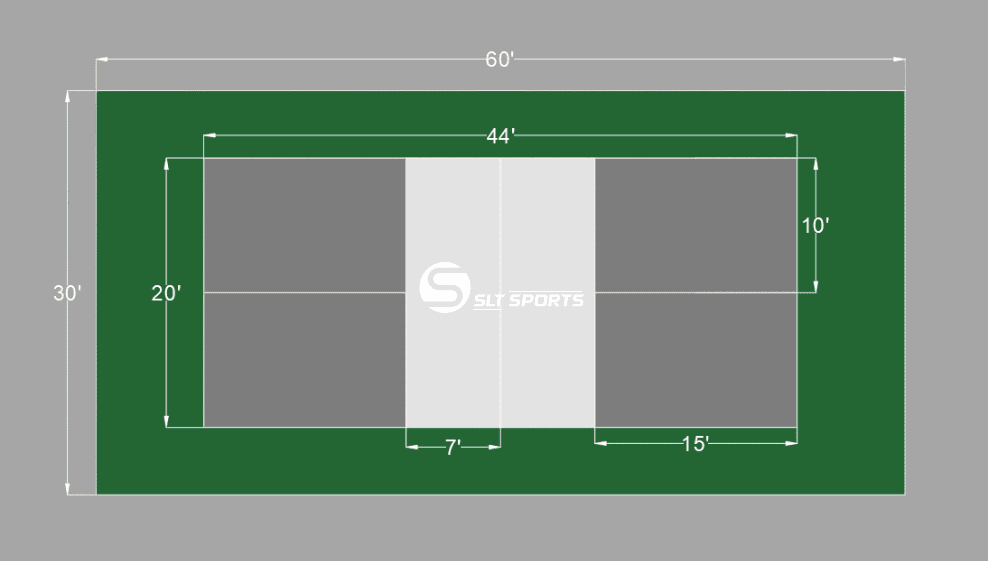
A pickleball court has to have a playing area that’s 20 feet wide and 44 feet long, and that’s non-negotiable. Those pickleball court dimensions have been designed to strike the perfect balance between player movement, reaction time, and shot angles, whether you’re playing singles or doubles.
Even small changes to court dimensions can significantly affect gameplay and overall playing experience. Serves start landing further in than you’d expect, cross-court becomes no contest, and rallies just lose their timing. Get it right, though, and players of all levels can enjoy the game the way it’s meant to be played.
Total Area Requirement Including Run-Off Space
While the playing area itself stays the same, the extra space around the court is just as important when it comes to safety and player comfort. You’ll get by with a 30 ft × 60 ft area, but it can feel a bit cramped, especially when you’re chasing some fast shots, whereas a more relaxed layout of 34 ft × 64 ft is a lot more pleasant for players.
And if you’re building a court for a club, academy or tournament, you should be aiming for 40 ft × 70 ft. It’s the best way to give players a real game day experience and still give you plenty of room for expansion in the future. Insufficient run-off space is a common planning mistake that often gets wrongly blamed on poor court surface quality.
Court Orientation for Outdoor Pickleball Courts
If you’re building a court outside, it should ideally be facing north-south, and this makes a real difference when it comes to sun glare. If you’re serving or returning from the baseline in the morning or evening, the sun isn’t going to be right in your eyes.
Courts that face east, west, on the other hand, are always going to have visibility problems that a fancy surface treatment just can’t fix. Get the orientation right, though, and you’ll have players who are a lot more comfortable and see a lot less eye strain, and you’ll get a lot more use out of the court.
Ground Preparation: The Foundation of a Court
Why Sub-Base Preparation Is Critical
Your sub-base is the main part of the court; without it, the whole thing will come crashing down. Literally, it’s what holds everything up and determines how stable the surface will be over the years.
If you’ve got loose soil, or your contractor didn’t quite get the compaction right, or there’s still some organic from a previous occupant, you’re going to have movement under the court. And that movement is going to manifest as cracks, uneven bounce, or just plain old depressions in the surface. Once that happens, you’re looking at a pricey and probably drawn-out fix.
Drainage Planning for Outdoor Pickleball Courts
Drainage is probably the most overlooked aspect of pickleball court construction. Let’s face it: a pickleball court is never perfectly flat; it’s built with a slight slope to let water just slide right off. But when you get drainage wrong:
- Water pools on the surface
- Algae and moss develop.
- The surface becomes slippery.
- The base weakens over time.
But when you get it right, your court dries in no time after a rain and stays safe for play all year round.
Soil Stability & the Long Game
Soil is different everywhere, and seasonal moisture changes can make it expand and contract, especially outside. If you don’t address soil stability during construction, this movement just gets transferred all the way up to the base and surface levels. Get it right, and your court will stay structurally sound for years to come, even when it’s being pounded by enthusiastic players all weekend.
Choosing the Right Base for a Pickleball Court
Concrete Base for Pickleball Courts
Concrete is one of the most popular bases for pickleball courts for good reason. When it’s done right, it gives you a solid, consistent platform that delivers that perfect ball bounce.
But concrete does have one catch: you need to give it time to properly cure before you put on any surface layer. Rushing this process can lead to all sorts of problems, from cracking to coating failure.
Asphalt Base for Pickleball Courts
Asphalt bases are super flexible and speed up the construction. They’re a popular choice for big sports complexes. They’re also more forgiving if someone slips up, but they come with their own set of challenges, like being super sensitive to heat and traffic.
In hot climates, asphalt can get a bit soft and lose some of its bounce over the years. With this option, you need to plan and resurface regularly to keep everything running smoothly.
Importance of Base Curing Time
This one might sound obvious, but curing time is not optional. Whether you go with concrete or asphalt, your base needs time to properly settle and stabilise before you start adding on the surface layers. If you ignore this, you’re probably looking at early cracks and an expensive fix for your pickleball court.
Pickleball Court Surface System Explained
Why Acrylic Flooring Is Ideal for Pickleball Courts
Acrylic sport pickleball court flooring has been engineered specifically with athletes in mind. It gives you a grip that’s just right enough to let you stop and change direction without slipping all over the place. You won’t find a paint that can handle all that action, foot traffic, ball bounces, sun beating down, and all the weather conditions in between. Acrylic surfaces are built to take it.
Performance Characteristics of a Quality Surface
A top-notch surface needs to deliver on a few key things:
- Non-slip traction
- Consistent ball bounce
- Comfortable foot response
- Resistance to weather and UV
If any one of these factors is missing, player confidence drops immediately.
Layered Acrylic Pickleball Court System
SLT Sports builds these systems custom for Indian conditions. In general, a quality system will include:
- Primer for strong base bonding
- Resurfacer to smooth imperfections.
- Optional cushion layers for comfort
- Acrylic colour coats for performance
- Line marking paint for durability
SLT Sports designs these systems specifically for Indian playing conditions.
Pickleball Court Line Markings
Standard Court Markings
Pickleball court markings include baselines, sidelines, centerlines, and that all-important non-volley zone line. Each line has a specific job in the game.
Importance of Accurate Kitchen Line Placement
Get that kitchen line just 7 feet from the net, or the court can get messy. Players are going to be arguing over foot faults and disputes, and disrupting play all over the shop. Getting the lines right is all about fairness and smooth gameplay.
Best Practices for Line Marking
When it’s time to mark out some lines, do it properly: take multiple measurements, get the masking right, and use the right type of paint that sticks to your surface. Don’t just put some paint on there and hope for the best.
Pickleball Court Cost Considerations
Factors Affecting Cost
Plenty of things can make the cost go up or down, depending on things like the condition of the site, whether you need to do anything about drainage, the type of base you use, the surface system, and whether you want to tack on any extras.
Long-Term Value
If you get the construction right in the first place, you’re going to save money in the long run because there’s less pickleball court maintenance to worry about, and you can just resurface the court instead of having to rebuild it from scratch.
Maintenance and Resurfacing
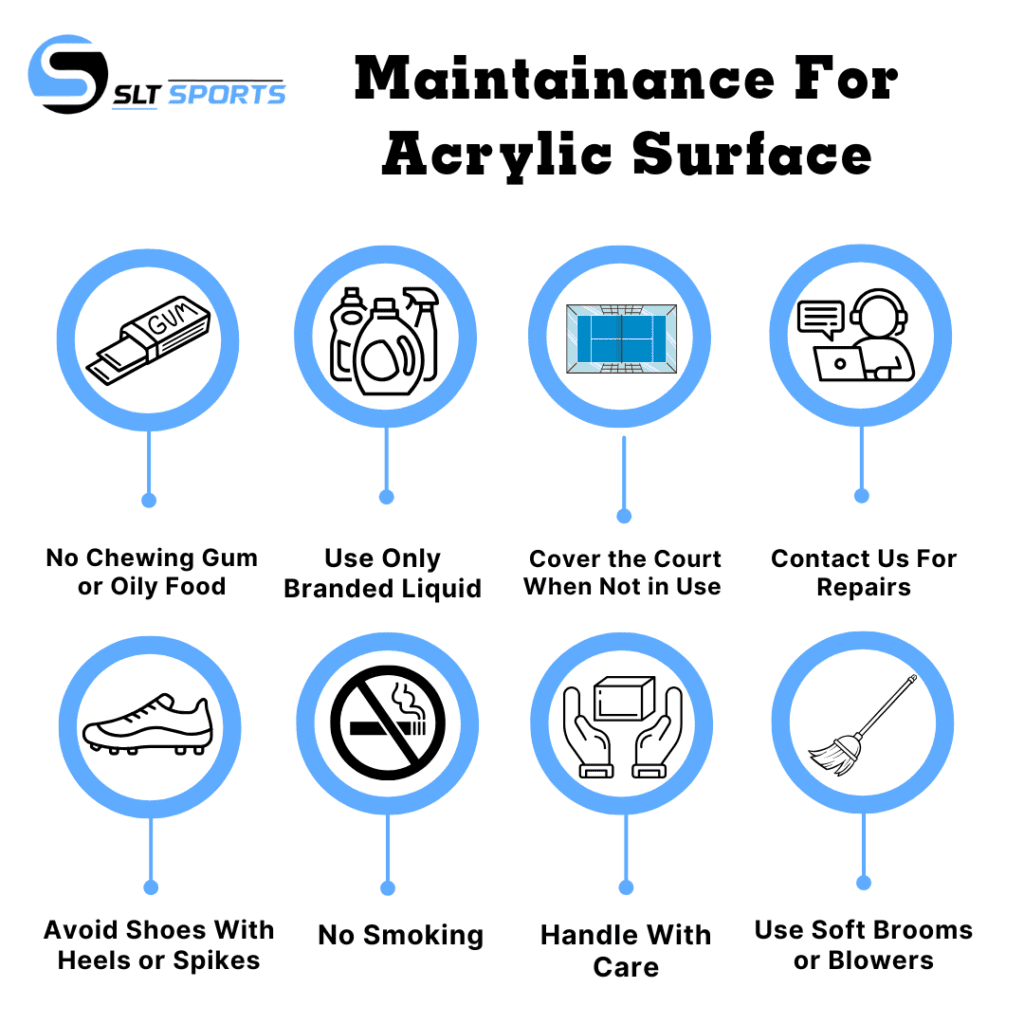
- Routine Maintenance- Regular sweeping and cleaning help maintain surface grip and ensure player safety over time.
- Resurfacing- Resurfacing restores court performance without disturbing the existing base structure.
Net Systems for Pickleball Courts
Standard Net Height
- 36 inches at the sidelines
- 34 inches at the centre
Maintaining these heights ensures fair play.
Permanent vs Portable Net Systems
Permanent nets give you the best play and durability, but portable nets can be handy if you’re setting up a temporary court or using the space for multiple sports.
Why Net Stability Matters
An unstable net can make a real difference in your game, especially when you’re playing near the kitchen and taking those shots.
Optional Enhancements for Better Play Experience
- Fencing – Fencing does a great job of keeping the ball in play and making things a lot safer to play on.
- Windscreens- Reduce wind interference and improve ball visibility, creating a comfortable and controlled playing environment.
- Lighting- Lighting lets you play pickleball well into the evening and gets used a lot more often than you might think.
- Seating and Shade- Seating and shade improve comfort, encourage longer play sessions, and increase repeat use of the court.
Conclusion
Building a pickleball court means creating a safe, consistent playing surface, not just adding lines and a net. Proper planning, strong base work, effective drainage, and acrylic flooring together determine long-term pickleball court performance.
When the foundation is prepared correctly and the right pickleball court flooring is used, the result is a court that delivers reliable ball bounce, excellent grip, and long-term durability with minimal maintenance. This approach also reduces future repair costs, as resurfacing can restore performance without rebuilding the entire court.
Frequently Asked Questions
20 ft × 44 ft.
Acrylic sports flooring over a concrete or asphalt base.
Yes, concrete is one of the most stable base options.
With proper construction and maintenance, many years with periodic resurfacing.