
Pickleball is taking over India, and empty rooftops, backyards and club spaces are being converted into fast paced courts. As the sport grows, the demand for reliable and high performance of synthetic acrylic flooring pickleball court has never been higher. Developers, sports clubs, housing societies and schools are all looking for the best surface – but which one delivers the most value?
At SLT Sports, India’s no.1 sports flooring company, we install acrylic synthetic systems. After hundreds of projects across India, we have a verdict: Two options are in the fray: synthetic acrylic flooring and modular tile systems. While both have their use cases, acrylic flooring is the clear winner for permanent, professional and outdoor pickleball court surface material – especially in Indian climate.
Pickleball Court Dimensions And Layout
Before we get into flooring options, it’s important to understand pickleball court dimensions. A standard pickleball court size is 20 feet wide and 44 feet long (6.1 m × 13.4 m). This is the same for singles and doubles play. Including run-off zones, the recommended play area is 30 ft × 60 ft to ensure safety during fast paced rallies.
Key Markings on a Pickleball Court
Non-Volley Zone (Kitchen)
This 7-foot zone on either side of the net prevents players from volleying the ball within it. It encourages softer shots and strategic play near the net.
Service Boxes
Each court half has left and right service boxes where the serve must land diagonally. These areas ensure proper serve alignment and scoring accuracy.
Centerline
The centerline splits the service area into two equal halves. It helps players identify their correct serving position and prevents service faults.
Sidelines and Baselines
Sidelines define the width of the court, while baselines mark the back boundary. These lines are important for in/out calls during rallies. Correct pickleball court installation always starts with accurate court dimensions, whether you’re building a standalone facility or converting a tennis court into a pickleball court using overlays or pickleball tape for courts.
Markings are non negotiable. SLT Sports uses high-solids acrylic line paint to ensure every dimension is to the mark.
Outdoor Pickleball Court Surface Options At A Glance
| Surface Option | Typical Base | Best Use Case |
| Acrylic synthetic coating | Concrete / asphalt | Permanent outdoor pickleball court flooring for clubs & schools |
| Modular polypropylene tiles | Concrete / asphalt / compacted stone | Semi-permanent courts, rooftops, events |
| Cushioned polyurethane | Concrete | Premium competition venues |
| Artificial turf with sand infill | Compacted soil / concrete | Multi-sport backyards |
For most Indian buyers, the real decision comes down to acrylic vs. modular, as both systems work well outdoors and are available from leading sports flooring manufacturers India.
Synthetic Acrylic Pickleball Court Flooring
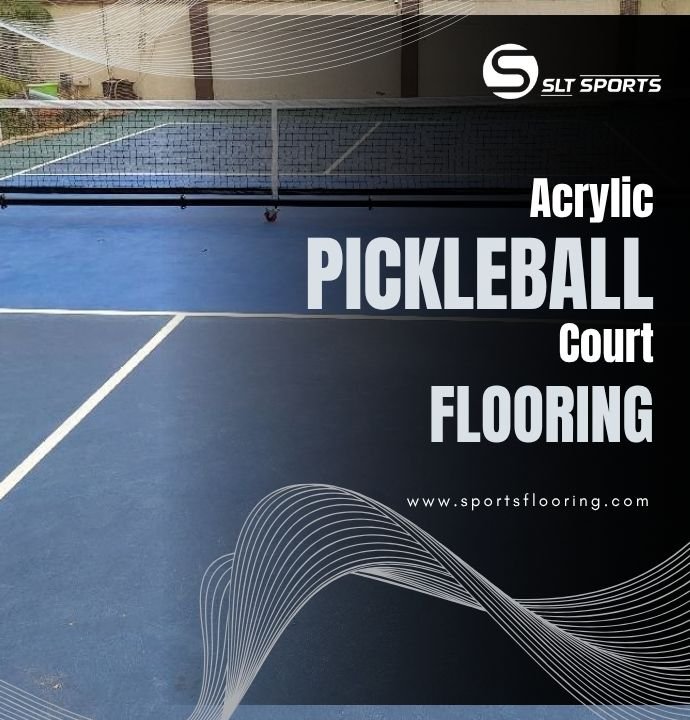
Synthetic acrylic pickleball court flooring is a multi-layer system comprising primer, filler or cushion coats, pigmented acrylic floor paint, and textured top coats broadcast with silica sand for traction. The trowel-applied coating bonds monolithically with the concrete base, sealing micro-cracks and creating a smooth surface.
Benefits
- True Ball Response
Smooth plane means predictable skid and spin, making acrylic the best pickleball court surface for serious players.
- Weather Toughness
UV-stable pigments can withstand Indian summers; water-based chemistry flexes through monsoon swings.
- Colour Freedom
Trending pickleball court color combinations like blue/green or grey/purple are easy to create.
- Longevity
With basic cleaning and a light resurfacing every 5–7 years, acrylic courts last 12–15 years.
- Optional Cushion
Rubberised layers reduce joint stress without changing official bounce characteristics.
Modular Interlocking Tile Flooring
Modular flooring is polypropylene tiles that snap together to form a “floating” surface over a flat base. Manufacturers say quick installation and portability. Benefits: Quick Setup
Modular tiles can be installed fast—two experienced pickleball court installers can do a full court in a day. Perfect for urgent or short term projects.
Benefits:
- Portability
The interlocking tile system allows the court to be taken down and moved. Great for temporary venues, leased spaces or event based installations.
- Shock Absorption
The design has built in clips and air pockets that provide some cushioning. Helps reduce stress on joints for casual or light play.
- Colour Swaps
Individual tiles can be replaced if they fade or get damaged. Perfect for maintenance and occasional updates to pickleball court colour combinations.
Acrylic vs. Modular Flooring: A Direct Comparison
| Feature | Acrylic Flooring | Modular Flooring |
| Play Performance | Consistent bounce and true grip, ideal for serious play and long rallies. | Bounce can vary across tiles; may feel soft or uneven in spots. |
| Weather Durability | Built to handle extreme heat and rain with UV-stable, weatherproof coatings. | Tends to warp or fade under strong sunlight; less reliable in monsoons. |
| Aesthetics | Seamless surface with bold, customizable color combinations and line markings. | Visible seams and limited color options; more utilitarian in appearance. |
| Maintenance | Low-maintenance surface that only needs occasional cleaning and repainting. | Requires tile replacements, cleaning underneath, and more frequent upkeep. |
| Lifespan | Lasts 10–15 years with proper care—built for longevity. | Typically lasts 3–6 years before wear and tear take a toll. |
| Customization | Fully customizable with vibrant colors, logos, and court branding. | Basic color options with limited layout or graphic flexibility. |
| Surface Feel | Smooth yet grippy underfoot—ideal for traction and quick movements. | Can feel plasticky or slippery, especially when wet. |
| Long-Term Cost | Higher upfront value with lower replacement and maintenance costs over time. | May cost more in the long run due to frequent replacements and repairs. |
Verdict:
Acrylic flooring wins on all fronts—from performance and durability to appearance and long-term savings. For anyone building a professional or permanent pickleball court, acrylic is clearly the smarter, more reliable choice.
Why Synthetic Acrylic Flooring Is Best For Indian Conditions
UV Resistance
Synthetic acrylic flooring has UV stable pigments that don’t fade even under Indian sun. The surface remains vibrant and functional year after year.
Water-Resistant
Though water based, synthetic acrylic coatings create a sealed surface that doesn’t absorb water. Perfect for heavy monsoon seasons.
Low Thermal Expansion
Synthetic acrylic flooring expands minimally in heat and contracts evenly in cooler temperatures. It doesn’t warp, buckle or lift under temperature fluctuations.
Anti-Slip Texture
The topcoat has micro texture for slip resistance. Players are safe during damp weather, year round playability.
Versatile Across Climates
From Delhi’s heat to Kerala’s humidity and Pune’s varied climate, acrylic synthetic flooring is stable and high performing in all Indian weather conditions.
Pickleball Court Installation: The Acrylic Process
Concrete Base Preparation
A level M30 grade concrete slab is laid as the base. Proper slope and curing ensures long term stability of the court structure.
Surface Grinding
The surface is mechanically ground to remove loose particles and create a texture for better adhesion with primer and coatings.
Crack Filling
All visible and micro cracks are filled with high strength resin or epoxy. Prevents water infiltration and future surface damage.
Primer Coat
A water based acrylic primer is applied to bond the concrete base with the upcoming layers. Enhances adhesion and surface uniformity.
Resurfacer or Cushion Coats
Optional layers like cushion coats add shock absorption and comfort. These layers reduce player fatigue and are ideal for high use courts.
Color Coats
Durable acrylic paint is applied in multiple layers, customised in your preferred pickleball court color combination. These coats resist UV and wear.
Line Marking
Precise line marking is done according to official pickleball court dimensions and standards, using long lasting, contrasting acrylic paint.
Final Inspection
The court is inspected for proper bounce, texture and grip. Ensures the surface meets global play and safety standards.
Backyard Pickleball Courts: Should You Use Acrylic?
Yes. While modular tiles are chosen for quick installation, acrylic flooring gives you a far better backyard pickleball court experience in terms of performance, looks and longevity. Acrylic gives you a seamless, professional finish with true ball bounce so you get consistent play like tournament conditions. It’s also highly customizable—with vibrant pickleball court color combinations and precise line markings based on official court dimensions, you can have a court that looks as good as it plays.
What makes acrylic even more attractive for Indian homes is its durability. Designed to withstand extreme sun, rain and temperature fluctuations, acrylic synthetic flooring is far more durable than modular options which can fade, crack or lift over time. With minimal maintenance, an acrylic court can last over a decade. Plus, when planned well, your acrylic court can double up as a multi-purpose court for badminton, futsal or fitness activities—making it a smart and versatile investment for families and residential communities.
Conclusion
When it comes to building a high-performance, weather-resilient and cost-effective pickleball court in India, acrylic is the clear winner. It gives you better playability, longer life and low maintenance – qualities that modular tiles and other surfaces can’t match in long term use.
Most Indian buyers decide between acrylic and modular tiles, but their long term performance is vastly different. From school campuses and housing societies to luxury resorts and private rooftops, SLT Sports delivers turnkey acrylic courts that look great and play even better.
Partner with an experienced pickleball court builder like SLT Sports and invest in a surface that will serve your community or family for years.
Frequently Asked Question
A standard pickleball court is 20 ft × 44 ft (6.1 m × 13.4 m) for singles and doubles. However, the recommended play area is 30 ft × 60 ft to allow safe player movement and run-offs.
Acrylic is better suited for Indian conditions. It withstands extreme heat, monsoon rains and UV exposure without warping or fading – unlike modular tiles which often deform or degrade outdoors.
Modular polypropylene tiles often expand, crack or lift under high heat or heavy rains. This affects bounce consistency and safety making them unreliable for long term outdoor use in India.
Acrylic gives you true and consistent ball bounce – essential for skilled play. Modular courts often give uneven or soft rebounds which can affect game quality and player performance.
Acrylic systems offer optional cushion layers made of rubberized coatings to reduce joint impact. These are ideal for senior players or high-use courts and still maintain standard bounce.