
Tennis players stepping onto a court first notice what they are standing on and the tennis court flooring colors that surround them. They might not even think about the net, the lines, or their opponents right away. Tennis court colors play a much bigger role than just looking nice; they influence how players perform, stay safe, and how spectators enjoy the game.
Choosing the right color mix matters a lot for sports centers, schools, clubs, and academies across India. It is not about how things look. The proper shades help players see better, reflect brand identity, follow international rules, and make the facility memorable in the best way possible.
This guide explains why choosing tennis court colors is important, what color schemes are popular in pro matches, and how venues can decide to ensure durability, good performance, and appealing looks.
Improving Player Safety and Visibility
Court surfaces must help players see the ball . Tennis court colors should stand out against the standard yellow tennis ball to make viewing easier. Shades like green or blue create enough contrast to ease the strain on the eyes. These colors help players spot the ball, boosting reaction time and enhancing the game.
A good choice of court color cuts glare in the sunlight and boosts safety for players in games. At places with night matches, using distinct court colors with clear boundary lines helps the game run better.
Making Courts Look Better and Supporting Branding
Sports arenas serve more than just practical purposes. They reflect pride and identity. Tennis court colors help build a club’s brand and make it stand out. Schools pick colors that match team uniforms, while major academies rely on special shades to grab attention in the competitive world.
The color design of a court also attracts players. A bright and polished surface gives athletes the feeling of competing on a top-level court.
Following Global Standards
Professional tournaments across the globe follow rules set by the ITF and USTA. Tennis court colors like blue and green are used because they help players and spectators see the ball better.
To host tournaments, sports facilities need to use ITF-approved tennis court colors. This is not just an option; it is a requirement.
Favorite Tennis Court Colors and Why They Work
Grass Green and Terracotta Red
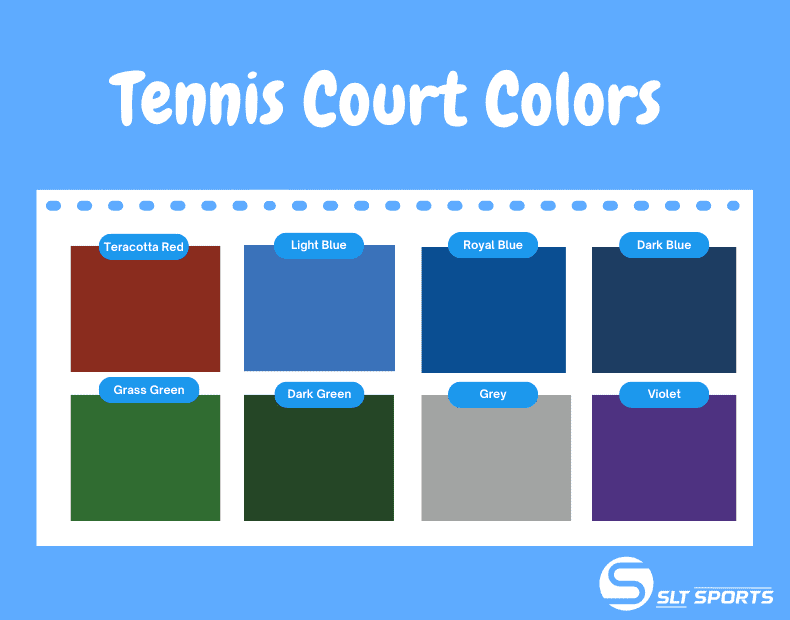
For many years, people in India have picked green and red as the standard colors for outdoor tennis courts. These earthy colors mix well with the environment around them. Schools, parks, and community areas often choose them because they fit in so well. This traditional mix looks appealing, costs less, and is still a common sight across the country. But the downside is that these colors lose their brightness faster under strong sunlight. They also make it harder to see the ball during televised matches when compared to newer color options.
Royal Blue & Grass Green
Big tournaments like the US Open and the Australian Open turned the blue and green color combination into a global standard. The royal blue court surface, surrounded by green edges, makes it easy to spot the yellow tennis ball. It helps both players keep track and lets spectators enjoy watching without missing any action. TV channels also like this setup as it makes matches look clear on screen. Apart from being useful, this color pairing gives courts a polished and professional vibe. That is why top-tier tennis venues choose it so often.
Royal Blue & Grey
A modern trend in tennis court that’s drawing more attention involves combining royal blue and grey. This pairing stands out with high contrast, offering clear ball visibility on the blue surface and a sleek, modern touch through grey accents. Many sports facilities pick this palette to show off a high-end and simple image. This choice not only looks polished but also works well for branding academies or private clubs. The royal blue and grey combo also adapts well to multi-sport courts where both style and practicality need to coexist.
Things to Think About Before Picking Colors for Tennis Courts
Weather and Climate Durability
India’s weather exposes tennis courts to extreme heat, heavy rains, and dusty breezes. Acrylic coatings with UV protection help Tennis Court Colors stay bold and last longer. Lighter colors keep courts cooler since they reflect heat more in hot areas.
Surface Type and Material Compatibility
Different surfaces hold up to colors in their own ways. Synthetic acrylic courts keep their pigments bright and less likely to fade. Clay courts allow a few color options, while concrete courts need top-quality acrylic coatings to stay colorful over time.
Maintenance and Ongoing Costs
Darker shades cover up dirt better but soak in more heat. Lighter colors lower surface heat but get stained and need regular cleaning. Places need to think about looks alongside maintenance plans and how often resurfacing is needed.
How Tennis Court Colors Shape Player Experience
Visual Comfort and Player Performance
Tennis demands quick reactions making clear vision essential. Courts with low contrast can tire a player’s eyes and result in errors. Picking the right Tennis Court Color helps reduce eye strain letting players concentrate on their game without being distracted by brightness or glare.
How Colors Influence Psychology
Colors can change how players feel and perform:
- Blue courts help players stay focused and relaxed, which works well in professional games.
- Red courts boost energy and make players more aggressive in their playstyle.
- Green courts provide a calm and natural environment, which suits casual and recreational use.
Choosing Tennis Court Colors to Match Facilities
Reflecting Facility Branding
Schools, colleges, and sports centers often pick court colors that match their brand identity. Picture a tennis school with courts painted in its unique colors—it stands out and is easy to promote.
Things to Think About for Multi-Sport Spaces
In India many places use the same court for games like basketball, pickleball court flooring, and futsal. Neutral shades like green or blue work best since they let you add markings for different sports without making things look messy.
Pro Tips for Building Sports Areas
- Use synthetic acrylic coatings to get colors that last and won’t fade.
- Stick with ITF-approved colors to create a professional playing experience.
- Get certified pigments that stay strong in UV light and survive monsoons.
- Talk to skilled installers to choose court colors that align with your facility’s branding and suit the local climate.
Conclusion
Tennis Court Colors are not just about looks—they play a key role in how well players perform, how safe the court is, and how the facility is recognized. Whether it’s the classic green and red, the professional blue, or customized modern shades, the right color choice can enhance the playing experience for athletes and leave a lasting impression on spectators.
To build sports facilities in India, selecting tough, UV-resistant synthetic acrylic coatings is the smartest decision. These coatings not meet global standards but also reflect the brand’s identity. SLT Sports delivers top-notch acrylic flooring solutions that combine durability and style helping facilities design courts that both function well and look amazing for years.
Frequently Asked Questions
The most popular tennis court colors are royal blue with green, traditional green with terracotta red, and modern grey with custom shades. Blue and green are widely used in professional tournaments for better ball visibility.
The International Tennis Federation (ITF) approves color schemes like blue, green, and red for tournament play. These shades ensure visibility and consistent playability worldwide.
For outdoor courts, blue and green are the best choices because they resist fading, improve visibility in sunlight, and meet international standards.
Consider climate, player safety, and branding needs. Blue and green are best for professional play, while custom shades like grey are ideal for luxury or multi-sport facilities.
Neutral colors like green, blue, or grey work best for multi-sport courts since they allow clear line markings for other games such as basketball or pickleball.